A highly critical SQL injection vulnerability in Drupal core has raised concerns across organizations running PostgreSQL-backed Drupal environments. Tracked as CVE-2026-9082, the vulnerability affects Drupal’s database abstraction layer and can be exploited remotely without authentication.
The vulnerability was disclosed through Drupal security advisory SA-CORE-2026-004 on May 20, 2026. CVE-2026-9082 is now under active exploitation. CISA added the vulnerability to its Known Exploited Vulnerabilities (KEV) catalog on May 22, 2026, less than two days after Drupal released the patch.
The vulnerability only impacts Drupal sites using PostgreSQL databases. However, the incident highlights a larger security concern that continues to affect modern application environments: backend-specific implementation vulnerabilities hidden inside trusted abstraction layers.
What Is CVE-2026-9082?
Risk Analysis
CVE-2026-9082 is a vulnerability in how Drupal processes certain PostgreSQL database queries within its database abstraction API. The vulnerability exists in the PostgreSQL EntityQuery condition handler, where user-controlled PHP array keys were not properly sanitized before being used during SQL placeholder construction.
Drupal’s database abstraction layer is designed to securely handle queries across multiple database backends. However, the PostgreSQL-specific implementation processed certain query conditions differently, creating an injection point that attackers could abuse through specially crafted requests.
The vulnerability is classified as:
- CWE-89: Improper Neutralization of Special Elements used in an SQL Command (‘SQL Injection’)
Drupal assigned the vulnerability a “Highly Critical” severity rating of 23/25.
Affected versions include:
- Drupal 8.9.0 before 10.4.10
- Drupal 10.5.0 before 10.5.10
- Drupal 10.6.0 before 10.6.9
- Drupal 11.0.0 before 11.1.10
- Drupal 11.2.0 before 11.2.12
- Drupal 11.3.0 before 11.3.10
The vulnerability only affects Drupal sites running PostgreSQL databases. Sites using MySQL, MariaDB, or SQLite are not impacted.
One of the most serious aspects of CVE-2026-9082 is that it can be exploited remotely without authentication. An attacker can send crafted requests to vulnerable Drupal instances and potentially gain access to sensitive data, manipulate database content, escalate privileges, or in some configurations to achieve remote code execution.
How CVE-2026-9082 Works in Drupal PostgreSQL Environments
The vulnerability exists in Drupal’s PostgreSQL-specific EntityQuery condition handler. Under certain conditions, attacker-controlled PHP array keys were not properly sanitized before being used during SQL placeholder generation.
Since placeholder construction directly affects how SQL queries are built and executed, crafted input could manipulate the final database query and create SQL injection opportunities.
Drupal fixed the vulnerability by applying array_values() during processing. This removes attacker-controlled array keys and replaces them with safe numeric indexes before query construction takes place.
Even small security fixes can quickly expose vulnerable logic once patch details become public. By analyzing patch diffs, threat actors can identify the vulnerable code path, understand the root cause, and reproduce exploit conditions against unpatched systems.
For defenders, this continues to narrow the gap between disclosure and active exploitation attempts, especially for publicly accessible applications.
Why Only PostgreSQL Deployments Are Affected
One of the most important aspects of CVE-2026-9082 is that the vulnerability only affects Drupal sites running PostgreSQL databases.
Deployments using:
- MySQL
- MariaDB
- SQLite
are not impacted because the vulnerable code path exists specifically within Drupal’s PostgreSQL query handling logic.
Many organizations assume database abstraction layers behave consistently across supported backends. In reality, backend-specific implementations can introduce unique logic branches that do not affect every environment equally.
In this case, the SQL injection vulnerability originated from PostgreSQL-specific EntityQuery processing rather than Drupal’s broader query abstraction layer. As a result, organizations running the same Drupal version could face very different exposure levels depending on their database architecture.
For security teams, this creates a hidden attack surface that can easily be missed during vulnerability assessments focused only on application versions. The incident reinforces the importance of environment-aware vulnerability management for applications supporting multiple backend technologies.
Potential Impact of CVE-2026-9082 Exploitation
According to the Drupal advisory, successful exploitation of CVE-2026-9082 could allow attackers to access sensitive data, manipulate or delete database content, escalate privileges, and in certain configurations potentially achieve remote code execution. Drupal’s own severity assessment describes the impact as allowing access to all non-public data while also enabling modification or deletion of stored information.
Public Disclosure Accelerated Exploit Risk
Two days before releasing the advisory for CVE-2026-9082, Drupal published PSA-2026-05-18 warning administrators to prepare for a highly critical security update. The announcement also cautioned that exploitation attempts could begin within hours or days after public disclosure.
That warning quickly became relevant after technical details surrounding the vulnerability started spreading publicly. Detection proof-of-concepts and reproduction labs appeared on the same day as the advisory, while patch diffs circulated rapidly across security communities and social platforms. Once patch analysis becomes publicly available, attackers can often trace the vulnerable code path and reproduce exploit conditions much faster.
Public patch analysis, automated diff inspection, and faster reverse engineering techniques have reduced remediation windows significantly. As a result, organizations can no longer assume they have several days to evaluate and deploy fixes for publicly exposed vulnerabilities.
For publicly accessible applications, delayed patching increasingly creates a narrow and high-risk exposure window immediately after disclosure.
Broader Risks in the Drupal Ecosystem Beyond CVE-2026-9082
The security updates released for CVE-2026-9082 also included coordinated fixes for upstream dependencies such as Symfony and Twig. Drupal noted that some of these dependency-related vulnerabilities could impact deployments depending on site configuration and enabled modules.
Because of this, organizations were advised to apply the latest Drupal updates even if their environments were not using PostgreSQL and therefore not directly affected by the SQL injection vulnerability itself.
The advisory also recommended reviewing which user roles have permission to modify Twig templates, update Views configurations, or access template-related contributed modules. In many environments, template engines can become high-risk attack surfaces if modification privileges are overly exposed or improperly controlled.
For Drupal environments, the risk extends beyond core vulnerabilities alone and includes upstream dependencies, contributed modules, and template-level access controls that may increase the overall attack surface.
CVE-2026-9082: Fixed Drupal Versions and Mitigation Guidance
Drupal released security patches across all supported branches affected by CVE-2026-9082. Due to the severity of the vulnerability, the project also issued exceptional releases for certain end-of-life branches.
| Branch | Fixed Release |
|---|---|
| Drupal 11.3.x | 11.3.10 |
| Drupal 11.2.x | 11.2.12 |
| Drupal 11.0.x / 11.1.x | 11.1.10 |
| Drupal 10.6.x | 10.6.9 |
| Drupal 10.5.x | 10.5.10 |
| Drupal 10.4.x | 10.4.10 |
Best-effort patches were also made available for Drupal 9.5 and Drupal 8.9. However, these versions remain unsupported and may still contain other known security vulnerabilities that will no longer receive regular fixes.
Organizations running PostgreSQL-backed Drupal deployments should prioritize patching immediately, especially for publicly accessible environments. Security teams should also review exposed Drupal assets, monitor database activity for suspicious query behavior, and audit user permissions related to template modification and Views configuration.
Since the vulnerability involves SQL injection conditions, validating existing WAF protections against malicious query patterns can also help reduce exposure while patching activities are underway.
What CVE-2026-9082 Reveals About Modern Application Risk
CVE-2026-9082 reflects several broader security trends affecting modern application environments.
Backend-Specific Implementations Can Create Hidden Risks
CVE-2026-9082 shows how backend-specific implementations can introduce security vulnerabilities even when applications use a shared abstraction layer. In this case, the vulnerability existed specifically within PostgreSQL query handling, meaning organizations running the same Drupal version could face different exposure levels depending on their database backend.
Faster Exploitation Timelines Reduce Response Windows
The vulnerability also highlights how quickly attackers can move after public disclosure. Patch diffs, automated analysis tools, and faster reverse engineering techniques now make it easier to identify vulnerable code paths shortly after fixes are released. For publicly accessible applications, delayed patching can quickly become a serious exposure risk.
Real-World Risk Often Extends Beyond Severity Ratings
Vulnerabilities affecting publicly accessible applications can present much higher operational risk than standardized severity ratings alone suggest. Since CVE-2026-9082 can be exploited remotely without authentication, exposed Drupal environments become attractive targets for opportunistic attacks soon after disclosure.
Public-Facing CMS Platforms Continue to Be Targeted
Widely deployed content management systems remain at frequent targets because they are commonly exposed to the internet and often support critical business operations. Historical Drupal vulnerabilities have repeatedly shown how quickly attackers begin scanning and targeting unpatched systems once technical details become public.
AppTrana Coverage for CVE-2026-9082
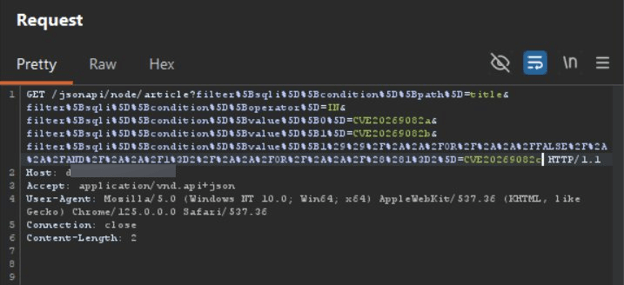
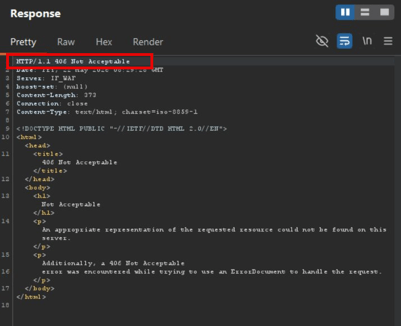
AppTrana’s core rule set includes built-in protection against SQL injection attacks, providing coverage against exploitation attempts targeting CVE-2026-9082. Organizations running PostgreSQL-backed Drupal environments are protected out of the box without requiring manual rule configuration. This ensures that even during the critical window between public disclosure and patch deployment, malicious requests attempting to exploit the vulnerability are blocked at the edge.
The following screenshots demonstrate an exploitation attempt against CVE-2026-9082 and AppTrana blocking the request in real time.
Stay tuned for more relevant and interesting security articles. Follow Indusface on Facebook, Twitter, and LinkedIn.