Microsoft released its October 2026 Patch Tuesday updates on October 14. The release patches 1,413 vulnerabilities across Windows, Office, SharePoint, Exchange, SQL Server, Azure, and developer tools. It is the largest security update in Microsoft’s history, following already heavy releases in August and September. Of these vulnerabilities, 78 are rated critical and 1,329 are rated important.
One vulnerability in this release is already under active attack. CVE-2026-96951 in Windows Shell is being exploited in the wild. CISA has added it to its Known Exploited Vulnerabilities catalog with a remediation deadline of October 16, 2026.
The release also patches a group of web application vulnerabilities in SharePoint Server and Exchange Server. These products often face the internet directly, which makes them early targets once patch details become public.
Microsoft recommends installing the updates promptly. A release of this size takes time to test and roll out, though, and enterprise change management rarely moves as fast as attackers. This bulletin covers the Windows Shell zero-day and the web application vulnerabilities that AppTrana WAAP protects against.
Microsoft October 2026 Patch Tuesday Highlights
| Category | Details |
| Release | Microsoft Patch Tuesday, October 2026 |
| Total Vulnerabilities Fixed | 1,413 |
| Critical Severity | 78 |
| Important Severity | 1,329 |
| Active Exploitation | CVE-2026-96951, Windows Shell Security Feature Bypass, added to CISA KEV with an October 16, 2026 deadline |
| Web Application Exposure | SharePoint Server spoofing and elevation of privilege vulnerabilities, Exchange Server spoofing vulnerability |
The Windows Shell Zero-Day Under Attack
CVE-2026-96951 is a security feature bypass vulnerability in Windows Shell. It stems from a command injection vulnerability that an unauthenticated attacker can exploit over the network. Attackers rarely use a security feature bypass on its own. They use it to switch off a protection that would block the next stage of an attack. Because it is confirmed exploited and carries a CISA deadline, it should be the first update every organization deploys from this release.
Microsoft Web Application Vulnerabilities to Prioritize
Microsoft rates these vulnerabilities important. Their risk comes from where they are found. SharePoint and Exchange often serve employees, partners, and customers over the internet, so an attacker can reach these vulnerabilities without first getting inside the network.
Microsoft Exchange Server Vulnerabilities
| CVE | Title | Description |
| CVE-2026-70279 | Microsoft Exchange Server Spoofing Vulnerability | A cross-site scripting vulnerability in Microsoft Exchange Server may allow an unauthenticated attacker to perform spoofing over the network. |
Cross-site scripting allows an attacker to inject malicious script into pages that users trust. In Exchange, that can mean fake content inside the email interface or attempts to steal session data. Since no authentication is needed, any internet-facing Exchange server is exposed until it is patched.
Microsoft SharePoint Server Vulnerabilities
| CVE | Title | Description |
| CVE-2026-70266 | Microsoft SharePoint Elevation of Privilege Vulnerability | An elevation of privilege vulnerability in Microsoft SharePoint Server may allow an attacker to gain higher privileges than their account should allow. |
| CVE-2026-88204, CVE-2026-102864, CVE-2026-102859, CVE-2026-88208 | Microsoft SharePoint Server Spoofing Vulnerability | A spoofing vulnerability in Microsoft SharePoint Server may allow an attacker to make malicious content or requests appear trustworthy. |
SharePoint stores documents and runs business workflows for many organizations. An attacker who gains elevated privileges or tricks users with spoofed content can reach sensitive data. On-premises SharePoint has been a recurring target in 2026, with several vulnerabilities moving from patch to active exploitation within weeks.
Microsoft is also disabling the ImportWeb SOAP feature in the October 2026 Cumulative Update for SharePoint. Teams that rely on it should plan for the change before deploying the update.
Additional Spoofing Vulnerabilities
| CVE | Title | Description |
| CVE-2026-88209, CVE-2026-97783 | Spoofing Vulnerability | A spoofing vulnerability may allow an attacker to make malicious content or requests appear trustworthy to users or applications. |
Why These Microsoft Vulnerabilities Demand Immediate Patching
Web-facing Microsoft applications draw attacker interest quickly after disclosure. Patch details give attackers a map to the vulnerable code, and SharePoint in particular has seen repeated exploitation this year. The Windows Shell zero-day in this release shows that some attackers are already ahead of the patch.
The size of this release adds its own pressure. Security teams now have more than 1,400 patches to test and deploy, and large rollouts raise the chance of missed or partially updated systems. Internet-facing SharePoint and Exchange servers should move through the patch cycle ahead of the rest of the estate.
Microsoft Patch Tuesday October 2026: Recommended Actions
The steps below sequence remediation by exposure and risk.
- Patch the exploited zero-day first: Deploy the patch for CVE-2026-96951 across all supported Windows systems immediately. The CISA deadline formally applies to US federal agencies, but every organization should treat it as its own.
- Prioritize internet-facing SharePoint and Exchange servers: Apply the October updates to SharePoint and Exchange instances that are reachable from the internet before internal deployments.
- Plan for the ImportWeb SOAP change: Check whether any SharePoint workflows depend on ImportWeb SOAP before deploying the October update, since Microsoft is disabling the feature.
- Restrict exposure where patching is delayed: If updates cannot go out right away, limit public access to SharePoint and Exchange. Restrict administrative interfaces to trusted networks.
- Review logs for suspicious activity: Look for unusual requests to SharePoint and Exchange endpoints, unexpected privilege changes, and script content in request parameters.
- Verify installation directly: Given the size of this release, confirm the installed update level on each server. Deployment reports alone may miss failed or partial installs.
AppTrana WAAP Coverage for Microsoft Patch Tuesday October 2026
AppTrana has coverage for vulnerabilities in this release, including the actively exploited Windows Shell zero-day CVE-2026-96951, along with CVE-2026-70279, CVE-2026-70266, CVE-2026-88204, CVE-2026-102864, CVE-2026-102859, and CVE-2026-88208.
AppTrana inspects incoming HTTP requests at the edge and blocks exploitation attempts before they reach vulnerable systems. Security teams can then test and deploy Microsoft’s updates on their own schedule, without leaving exposed systems open in the meantime.
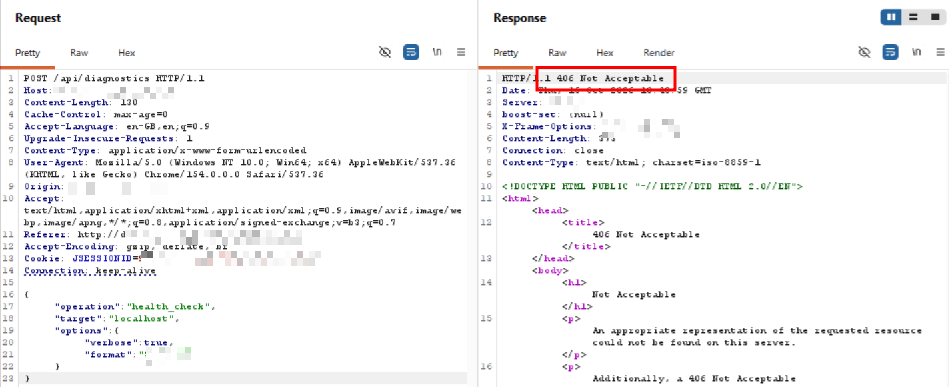
AppTrana blocked the CVE-2026-96951 exploitation attempt, returning a 406 Not Acceptable before the command injection payload could reach the target system.
Stay tuned for more relevant and interesting security articles. Follow Indusface on Facebook, Twitter, and LinkedIn.